Blog
Why Choline's Reference Amount Changes by Who's Taking It
Quick answer
Gelagen lists 0.04 mg of choline per 2 gummies, shown as <1% DV against the FDA's single adult Daily Value of 550 mg. That 550 mg reference is the Adequate Intake (AI) set for adult men. NIH's Office of Dietary Supplements lists a different AI for adult women (425 mg), and higher AIs again in pregnancy (450 mg) and lactation (550 mg). The single %DV on any label flattens that split into one number, which matters more as the amount involved gets larger — though at 0.04 mg, Gelagen's line is negligible against any of these targets.
What does the Gelagen label show for choline?
Per 2 gummies, Gelagen lists 0.04 mg of choline. Measured against the FDA's adult Daily Value of 550 mg, that works out to under 1%: 0.04 ÷ 550 = 0.00007, or <1% DV, exactly as the Supplement Facts panel shows it. The full panel lists 13 ingredients in total; choline sits near the bottom in printed amount, alongside inositol as one of the two lines measured in milligrams or micrograms rather than larger units.
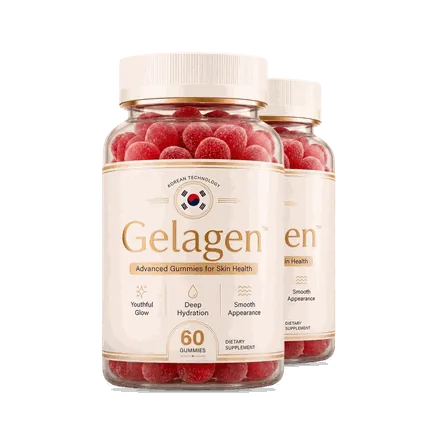
That single reference number, 550 mg, is worth tracing back to where it comes from, because it is not an average and it is not the same figure NIH publishes for every adult.
Why does a supplement label use one Daily Value for every adult?
US Nutrition and Supplement Facts labels are built to work for a general audience, so FDA assigns each nutrient a single adult Daily Value (DV) rather than printing a different percentage for every age and sex. For nutrients with an RDA or AI that varies by sex, FDA's general practice is to set the DV using the highest reference figure across the standard adult groups, so that the printed percentage does not understate anyone's need. For choline, the figure FDA uses as the Daily Value is 550 mg — the same number NIH's Office of Dietary Supplements lists as the Adequate Intake for adult men.
That approach keeps the label simple, but it means the printed %DV answers the question "how does this amount compare to the reference figure on the label," not the more personal question "how does this amount compare to what I, specifically, need." For most nutrients and most label amounts, the difference between those two questions does not change the practical takeaway. For a nutrient whose reference figure differs by close to 25% between men and women, as choline's does, it is worth knowing that the gap exists even if, in Gelagen's case, the printed amount is too small for the gap to matter in practice.
What is the actual Adequate Intake table for choline?
NIH's Office of Dietary Supplements publishes Adequate Intakes (AIs) for choline by age, sex, pregnancy and lactation. Choline does not yet have an RDA; the Food and Nutrition Board found the data insufficient to set one, so it set AIs instead, based in part on preventing liver damage as measured by serum alanine aminotransferase levels.
| Group | Adequate Intake | Gelagen's 0.04 mg as % of this AI |
|---|---|---|
| Adult men (19+) | 550 mg/day | <0.01% |
| Adult women (19+) | 425 mg/day | <0.01% |
| Pregnancy | 450 mg/day | <0.01% |
| Lactation | 550 mg/day | <0.01% |
The 550 mg printed as the label's Daily Value matches the men's and lactation figures exactly. It is about 29% higher than the 425 mg AI for adult women who are not pregnant or lactating. A woman reading "<1% DV" on any choline-containing label is reading that figure against a 550 mg yardstick that is roughly 125 mg higher than her own AI — a gap that would move the percentage more at a higher dose than Gelagen's, though at 0.04 mg per serving, the arithmetic stays at "negligible" under every version of the table.
Why does choline's reference amount split by sex and life stage at all?
According to NIH's fact sheet, "the amount of choline that individuals need is influenced by the amount of methionine, betaine, and folate in the diet; gender; pregnancy; lactation; stage of development; ability to produce choline endogenously; and genetic mutations that affect choline needs." Choline sits at a metabolic crossroads: the body can synthesize some of it internally (via a pathway that uses estrogen-responsive enzymes, which is part of why pregnancy and lactation AIs rise, and part of why sex is itself a factor), and dietary folate and methionine status affect how much the body still needs from food.
NIH's fact sheet is specific about the mechanism behind the sex gap: "premenopausal women might need less choline from the diet than children or other adults because estrogen induces the gene that catalyzes the biosynthesis of choline." In other words, estrogen activates part of the body's own choline-making pathway, which is also why the AI rises again in pregnancy and lactation — those life stages carry their own separate demands even as the estrogen-linked synthesis is in play. The fact sheet adds that when a diet is low in folate, another methyl-donor nutrient, the need for dietary choline rises because choline has to cover more of that role itself. None of this changes what a single %DV figure can show on a label; it explains why the underlying reference figure was never going to be one flat number for every adult in the first place.
That is different from a nutrient like vitamin C, where the adult RDA gap between men (90 mg) and women (75 mg) is comparatively narrow in percentage terms. Choline's roughly 23% gap between the 550 mg male AI and 425 mg female AI is large enough that collapsing it into one label number is a bigger simplification than it is for most rows on a typical panel.
What does this mean for reading a choline line on any label?
Three things are worth separating when a %DV is printed for choline specifically:
The %DV uses one fixed number (550 mg)
That figure is the adult male AI, also used for lactation. It is not adjusted for the reader's own sex or life stage anywhere on the printed label.
A woman's own reference point is about 23% lower
At 425 mg, a non-pregnant woman's AI is reached at a smaller printed amount than the label's 550 mg would suggest.
At Gelagen's amount, the gap is moot
0.04 mg is such a small fraction of any of these numbers — men's, women's, pregnancy, or lactation AI — that no single-ingredient supplement at this dose is a meaningful choline source under any version of the reference table.
The practical reading habit this suggests: for any nutrient whose %DV is built on a sex-specific or life-stage-specific reference, check which group the printed Daily Value actually represents before using the percentage as a personal measuring stick — a habit that matters far more at doses in the hundreds of milligrams than at Gelagen's 0.04 mg line.
Where do most people actually get choline?
NIH's fact sheet notes that the main dietary sources of choline in the US are animal-based foods rich in choline — meat, poultry, fish, dairy products, and eggs — along with cruciferous vegetables, certain beans, nuts, seeds, and whole grains. About half of dietary choline in the US diet comes in the form of phosphatidylcholine. Choline is also present in breast milk and added to most commercial infant formulas.
Against that backdrop, a 0.04 mg line on a gummy's label sits far below what a single egg provides, and reflects that choline is not the ingredient Gelagen's formula is built around — the full panel is led by biotin, B12 and folate at far higher %DV figures. Readers specifically looking to track choline intake toward either the 550 mg or 425 mg AI would need to look at food sources or a product formulated with choline as a primary ingredient, not a trace line like this one.
How does choline's sex gap compare with other rows on the same panel?
Choline is not the only nutrient with a sex-specific reference figure; it is just one where the label's single %DV hides a comparatively wide gap. NIH's Recommended Dietary Allowance (RDA) tables show the pattern across other Gelagen label ingredients too, when the AI or RDA is broken out by sex for adults 19 and up.
| Nutrient | Male reference | Female reference | Approx. gap |
|---|---|---|---|
| Choline (AI) | 550 mg | 425 mg | ~23% |
| Vitamin A (RDA) | 900 mcg RAE | 700 mcg RAE | ~22% |
| Vitamin C (RDA) | 90 mg | 75 mg | ~17% |
For vitamin A and vitamin C, Gelagen's own Daily Value already uses the higher, male-based figure (900 mcg and 90 mg respectively), the same pattern as choline's 550 mg DV. The gaps are a similar size across all three nutrients — roughly a fifth to a quarter higher for men than for women. What makes choline worth a dedicated look is not that its gap is unusually large, but that the panel amount involved (0.04 mg) is so far below any version of the reference that the question become academic for this specific product, while the same 23% gap would matter more for a product whose choline line was closer to triple digits.
The general lesson carries past this one panel: whenever a label uses a single adult Daily Value for a nutrient that NIH or FDA defines with a sex split, the printed percentage is reading against the higher of the two figures. That is worth knowing before using any %DV as a stand-in for "percent of what I personally need," particularly at doses large enough for the gap to be more than a rounding error.
Choline's reference amount: common questions
Why does Gelagen show <1% DV for choline?
Each serving has 0.04 mg of choline. Divided by the FDA adult Daily Value of 550 mg, that is a small fraction of 1%, so the panel shows <1%.
Is 550 mg the right target for everyone?
550 mg is the Adequate Intake NIH lists for adult men and for lactation. Adult women who are not pregnant or lactating have a lower AI of 425 mg, and pregnancy sits at 450 mg. The printed Daily Value is one fixed number used for every adult on the label.
Does Gelagen's amount meaningfully contribute to choline intake?
No. At 0.04 mg per serving, the amount is a negligible fraction of any version of the AI table, whether 425 mg or 550 mg.
Why doesn't choline have an RDA like vitamin C does?
NIH's Food and Nutrition Board found the available data insufficient to set a formal Estimated Average Requirement for choline, so it set Adequate Intakes instead, based in part on usual intake and on preventing liver-enzyme changes.
Should pregnant or nursing people check with a clinician before taking Gelagen?
Yes. Geleagen's own label and site note to talk to a clinician first if pregnant or nursing, consistent with general practice for supplement products, independent of this specific choline amount.
Where can I see Gelagen's full ingredient panel?
The Supplement Facts page lists all 13 lines with amounts and %DV, including the choline and inositol lines discussed here.
References
- NIH Office of Dietary Supplements (accessed 2026), Choline: Fact Sheet for Health Professionals (Table 1, Adequate Intakes for Choline).
- U.S. Food and Drug Administration, 21 CFR 101.9 — Nutrition labeling of food.

Ready when you are
Order Gelagen from the authorized outlet
$49 to $79 a bottle, 60 gummies each. Every order has a 60-day money-back guarantee. Questions before you buy? The contact page says which desk answers what.

Keep reading
Gelagen Supplement Facts
All 13 label ingredients, amounts, %DV and what each one does.
Read →BlogWhy Pantothenic Acid Deficiency Almost Never Gets Diagnosed
What NIH's deficiency evidence says about reading a 104% DV line.
Read →BlogBiotin and Blood Tests
Each serving has 5,000 mcg of biotin and what that can mean for lab results.
Read →