Blog
What "GMP Certified" Actually Requires a Manufacturer to Do
Quick answer
"GMP Certified" refers to 21 CFR Part 111, the FDA's Current Good Manufacturing Practice rule for dietary supplements. The rule itself requires a manufacturer to set specifications for identity, purity, strength and composition, test or verify that components and finished batches meet them, and keep written records of every step. A seal on a bottle does not disclose which of those steps were met by lab testing versus a supplier's paperwork, who audited the claim, or when. The Gelagen label carries this seal; the panel amounts themselves are on the Supplement Facts page.
What does "GMP Certified" actually refer to?
"GMP" stands for Current Good Manufacturing Practice. For dietary supplements sold in the United States, that phrase has one specific legal meaning: 21 CFR Part 111, a federal regulation titled "Current Good Manufacturing Practice in Manufacturing, Packaging, Labeling, or Holding Operations for Dietary Supplements." FDA finalized the rule in 2007 (72 FR 34942, June 25, 2007), and it has applied to every US dietary supplement manufacturer, regardless of company size, since 2010.
That matters because it means CGMP is not an optional add-on a brand can choose to pursue. It is baseline federal law for anyone legally manufacturing a dietary supplement in the US. A seal that says "GMP Certified" is not announcing that the maker opted into a voluntary quality program; it is asserting compliance with a rule every lawful manufacturer is already required to follow.

Part 111 is organized into subparts covering personnel, the physical plant, equipment, production and process controls, quality control, component and label handling, master manufacturing records, batch production records, laboratory operations, packaging and labeling operations, holding and distribution, returned supplements, product complaints, and records and recordkeeping. The three pieces that do the most work for a buyer trying to understand what a "GMP Certified" claim is standing on are specifications, testing, and records — covered below.
The rule's starting point: written specifications
Before CGMP asks a manufacturer to test anything, it asks the manufacturer to write down what "correct" means. Under 21 CFR 111.70(e), "for each dietary supplement that you manufacture you must establish product specifications for the identity, purity, strength, and composition of the finished batch of the dietary supplement, and for limits on those types of contamination that may adulterate, or that may lead to adulteration of, the finished batch of the dietary supplement to ensure the quality of the dietary supplement."
The same section requires specifications for the raw components that go into the batch (111.70(b)), for the packaging and labels used (111.70(d)), and for a received product if the company is only packaging or labeling someone else's formula (111.70(f)). In plain terms: before a single gummy is made, the rule requires the manufacturer to have already written down, in advance, what the finished product is supposed to be — what is in it, how much, how pure, and how strong.
Testing components before they go into a batch
Writing a specification is step one. Checking that reality matches it is step two, and this is where Part 111 gets specific about method. Under 21 CFR 111.75(a)(1)(i), a manufacturer must "conduct at least one appropriate test or examination to verify the identity of any component that is a dietary ingredient" before using it — unless FDA has granted a petitioned exemption for that specific case.
For other components (not dietary ingredients themselves, such as excipients), 111.75(a)(2) gives the manufacturer two routes: run its own tests, or rely on a supplier's certificate of analysis. The second route is conditional, not automatic. The regulation requires the manufacturer to first "qualify the supplier by establishing the reliability of the supplier's certificate of analysis through confirmation of the results of the supplier's tests," keep documentation of how that qualification was done, periodically re-confirm it, and have quality control personnel review and approve the file.
This detail matters for reading a seal, because "GMP Certified" does not tell a buyer which route a given manufacturer used for a given ingredient — in-house testing or a reviewed supplier certificate. Both are legal paths through the same rule, but they are not the same amount of direct verification.
Verifying the finished batch meets spec
Part 111 does not stop at raw components. Under 21 CFR 111.75(c), for a subset of finished batches identified through a sound statistical sampling plan (or for every batch, if the manufacturer chooses), the company "must verify that your finished batch of the dietary supplement meets product specifications for identity, purity, strength, composition, and for limits on those types of contamination that may adulterate or that may lead to adulteration of the finished batch." The rule also requires monitoring "in-process points, steps, or stages where control is necessary" (111.75(b)) to catch a deviation before the batch is finished, not only after.
Put together, Part 111 asks for three checkpoints: components before use, the process while it runs, and the finished batch before it ships. A manufacturer that is actually following the rule has records for all three. A seal on a bottle does not show any of those records to the person holding the bottle; it is a visual claim that the underlying system exists.
Written procedures and recordkeeping
CGMP is, in large part, a paperwork requirement. The rule repeatedly uses the phrase "you must establish and follow written procedures" across its subparts — for cleaning, for equipment calibration, for handling components, for packaging and labeling operations, for handling a product complaint. Subpart P of Part 111, covering 21 CFR 111.605 through 111.610, is titled "Records and Recordkeeping" and sets out what requirements apply to the records a manufacturer makes and keeps, including that records must be kept for one year past the shelf-life date, or two years past distribution if no shelf-life date is used.
- Master manufacturing record for each formulation
- Batch production record for each specific batch made
- Component and supplier qualification files
- Laboratory test results and equipment calibration logs
- Complaint files and any related investigation records
None of this paperwork is visible from a product's packaging. A "GMP Certified" seal is a shorthand for "this system of specifications, testing, and records is said to exist," not a window into the records themselves.
What the seal on a bottle does and doesn't tell you
The table below separates what 21 CFR Part 111 actually requires from what a "GMP Certified" graphic, by itself, discloses to the person reading a product page.
| Required by 21 CFR Part 111 | Shown by a "GMP Certified" seal graphic |
|---|---|
| Written specifications for identity, purity, strength, composition (111.70) | Not shown — the specifications are internal documents |
| Component identity testing or a qualified supplier certificate (111.75(a)) | Not disclosed which route was used for a given ingredient |
| Finished-batch verification against specification (111.75(c)) | Not disclosed whether every batch or a sampling plan was used |
| Written procedures and batch/complaint records (Subpart P) | Not shown — records are not public documents |
| Who audited compliance, and when | Not stated by the graphic itself; varies by seal and program |
None of this means a seal is meaningless. CGMP compliance is a federal requirement, and a manufacturer that is actually following it has, by law, done the specification-writing, testing, and recordkeeping described above. The point is narrower: the seal is a label, not a disclosure of method. Two products can carry a similar-looking "GMP" graphic while resting on different amounts of direct lab verification, different audit timing, and different auditors, because the rule itself permits more than one compliant path.
It also helps to know what CGMP certification is not. FDA does not "approve" supplements, and FDA itself does not issue a "GMP Certified" seal to a brand. FDA's role is inspecting manufacturing facilities for CGMP compliance and taking enforcement action when a facility falls short; it does not pre-certify a product line. A seal graphic on a bottle, if third-party audited, reflects that private auditor's assessment against the same CGMP standard, not an FDA endorsement. The Geleagen site states plainly that the seals shown describe the facility and policy and are not endorsements.
How this differs from facility registration
CGMP is sometimes confused with a separate requirement: facility registration under 21 CFR Part 1, Subpart H, which requires food and supplement facilities to register with FDA so the agency knows the facility exists and where it is. Registration is an administrative listing; it does not itself certify that a facility is following CGMP, and CGMP compliance does not depend on a specific registration number being printed anywhere. They are two different parts of the same regulatory chapter, addressing two different questions: Part 1 asks "does FDA know this facility exists," and Part 111 asks "does this facility make dietary supplements the way the rule requires." A seal referencing an "FDA-registered facility" is making the first claim, not the second.

Reading a label with both seals present is easiest if each claim is kept in its own box: registration says the facility is on FDA's list; GMP says the facility is asserting compliance with the specification-testing-recordkeeping system in Part 111. Neither claim is a statement that FDA tested, approved, or endorsed the specific product on the shelf.
How does this apply to reading the Gelagen label?
Gelagen's footer carries both a GMP seal and an FDA-registered-facility roundel, alongside a note that the manufacturer name and country of manufacture are not published on the site. CGMP compliance does not require a manufacturer's name to be printed on a label or a product page; the rule governs the manufacturing process and its records, not what marketing copy discloses about company identity. A reader who wants to verify manufacturing claims beyond the seal itself would need information the published materials do not currently provide, such as the manufacturer's name or a specific audit report.
The Gelagen Supplement Facts page lists the 13 labeled ingredients and amounts that CGMP specifications would be built around; the testing and quality page covers related quality topics for this product specifically.
GMP certification: common questions
Is CGMP compliance optional for supplement makers?
No. 21 CFR Part 111 has applied to all dietary supplement manufacturers in the US since 2010, regardless of company size. It is a legal baseline, not a voluntary program a brand opts into.
Does FDA issue "GMP Certified" seals?
No. FDA inspects facilities for CGMP compliance and can take enforcement action, but it does not pre-certify a product or issue a seal graphic. A seal on a bottle, where third-party audited, reflects that auditor's assessment, not an FDA endorsement.
Does CGMP require every finished batch to be lab tested?
21 CFR 111.75(c) allows verification through a sound statistical sampling plan across batches, or testing of every batch. The rule permits either approach; a seal alone does not say which one a given manufacturer uses.
Is a GMP seal the same as facility registration?
No. Facility registration (21 CFR Part 1) tells FDA a facility exists and where. CGMP (21 CFR Part 111) covers whether that facility follows specification, testing and recordkeeping requirements for how supplements are made. They are separate regulations answering separate questions.
Can a manufacturer use a supplier's certificate instead of its own lab test?
For non–dietary-ingredient components, yes, under 21 CFR 111.75(a)(2) — but only after qualifying the supplier's certificate of analysis through confirmed testing, with documentation kept and periodically re-confirmed. For a dietary ingredient's identity, direct testing is required unless FDA has granted a specific exemption.
Where can I see what Gelagen's own label discloses?
The Supplement Facts page lists every labeled ingredient and amount. It also notes which details, such as manufacturer name and country of manufacture, are not published.
References
- U.S. Food and Drug Administration, 21 CFR Part 111 — Current Good Manufacturing Practice in Manufacturing, Packaging, Labeling, or Holding Operations for Dietary Supplements (72 FR 34942, June 25, 2007).
- U.S. Food and Drug Administration, 21 CFR 111.70 — What specifications must you establish?
- U.S. Food and Drug Administration, 21 CFR 111.75 — What must you do to determine whether specifications are met?
- U.S. Food and Drug Administration, 21 CFR 111.605 — What requirements apply to the records that you make and keep?
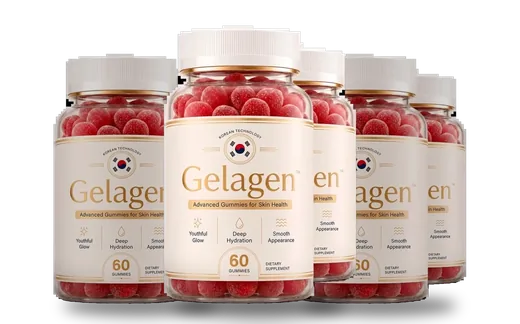
Ready when you are
Order Gelagen from the authorized outlet
$49 to $79 a bottle, 60 gummies each. Every order has a 60-day money-back guarantee. Questions before you buy? The contact page says which desk answers what.

Keep reading
Gelagen Supplement Facts
All 13 label ingredients, amounts, %DV and what each one does.
Read →BlogThe No-Daily-Value Footnote Rule
The specific regulation that lets a label print an amount with no percentage next to it.
Read →BlogWhy Vitamin D's Daily Value Beats Its RDA
A 2016 FDA rule explains the one reversed row on this panel.
Read →