Blog
The Footnote Rule That Lets a Label Print an Amount With No Daily Value
Quick answer
Gelagen's panel lists inositol at 40 mcg with a dagger (†) instead of a percentage, marked "Daily Value not established." That is not a gap in the label — it is a specific FDA rule. 21 CFR 101.36 requires a symbol and footnote in place of a percentage whenever no Daily Value exists for an ingredient, while still requiring the quantitative amount itself to be printed in metric units. The rule is what makes "40 mcg, no %DV" a legal combination to print, rather than an omission.
What does the Gelagen label show for inositol?
Per 2 gummies, Gelagen lists inositol at 40 mcg. Instead of a percentage in the "% Daily Value" column, the panel shows a dagger symbol (†), and a footnote beneath the table reads "Daily Value not established." That is the smallest printed amount on the panel, and the only line, along with the units themselves, that carries a symbol instead of a number in that column. The full table is on the Supplement Facts page.
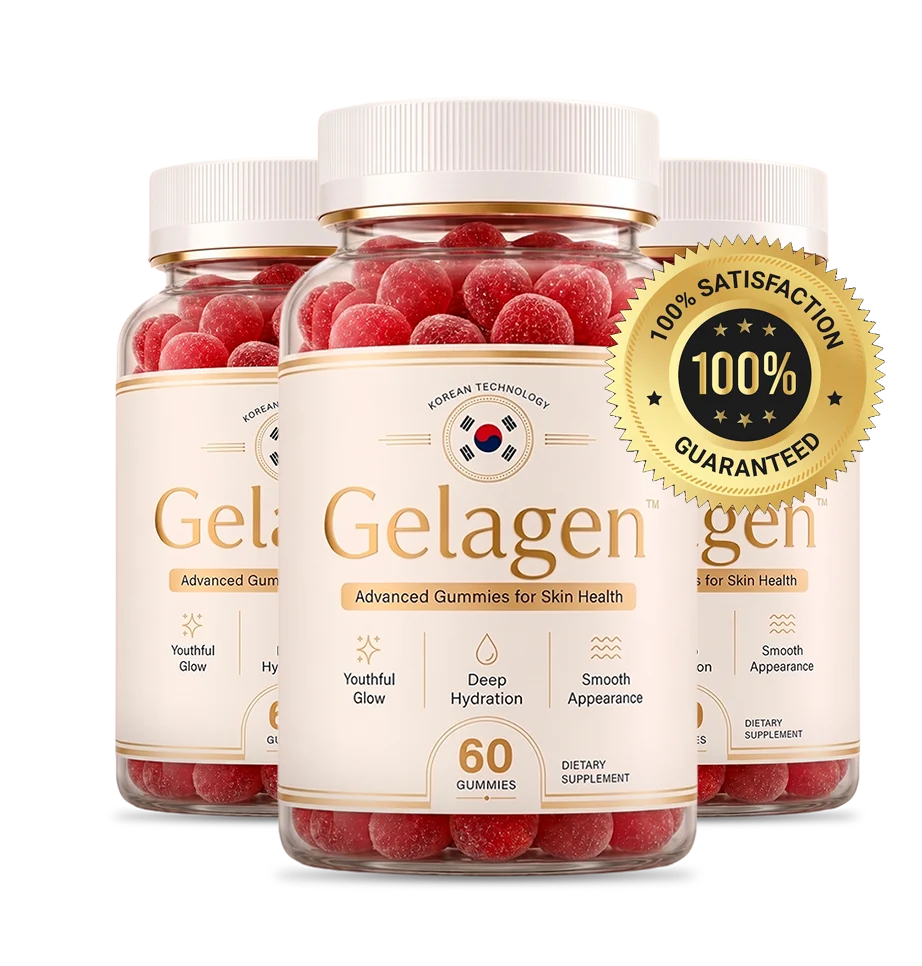
It would be easy to read a missing percentage as missing information. It isn't — it's the result of a specific labeling mechanism that both permits an amount to be printed and specifically forbids a percentage from being printed alongside it, for exactly this situation.
What is the specific rule that governs this?
The rule is 21 CFR 101.36, FDA's labeling regulation for the Supplement Facts panel. It covers how every line on a supplement label has to be built — names, amounts, units, and the % Daily Value column — including the specific case of a dietary ingredient for which FDA has not set a Reference Daily Intake (RDI) or Daily Reference Value (DRV). Inositol falls into that category: it has no RDI and no DRV, so it is what the regulation calls an "other dietary ingredient."
This is a labeling-format rule, not a safety rule. It says nothing about whether 40 mcg of inositol does anything in particular; it only governs how a manufacturer is required to print that number, and what it is required to print instead of a percentage when no official reference figure for that ingredient exists. The same section of the regulation sets out comparable formatting rules for dozens of other label elements — serving-size declarations, rounding rules for different nutrients, and how multiple intended groups (such as adults versus children) must be handled when a product serves more than one — so the inositol footnote is one small, specific application of a much larger formatting framework, not a one-off exception written for this ingredient alone.
What exactly does the symbol-and-footnote requirement say?
Under 21 CFR 101.36(b)(2)(iii)(F), for declared subcomponents that have no DRVs or RDIs, "a symbol (e.g., an asterisk) shall be placed in the 'Percent Daily Value' column that shall refer to the same symbol that is placed at the bottom of the nutrition label... and followed by a statement 'Daily Value not established.'" Gelagen's panel uses a dagger rather than an asterisk, but the mechanism is the same one the regulation describes — any consistent symbol is acceptable as long as it links the ingredient's row to the footnote statement.
| Label element | What the rule requires |
|---|---|
| Name of the ingredient | Declared by its common or usual name |
| Quantitative amount | Must still be printed, in metric units (101.36(b)(3)(ii)) |
| % Daily Value column | No percentage given — a symbol is placed instead (101.36(b)(2)(iii)(F)) |
| Footnote | Must state "Daily Value not established," tied to the same symbol |
Read together, the rule does two things at once: it bars a percentage from being printed when there is no official reference figure to calculate it against, and it requires a specific, standardized footnote statement to appear so a reader is not left guessing why the percentage is missing.
Why does the amount still have to be printed?
This is the part of the rule that actually answers the question in this post's title. Under 21 CFR 101.36(b)(3)(i), "dietary ingredients for which FDA has not established RDI's or DRV's... (hereinafter referred to as 'other dietary ingredients') shall be declared by their common or usual name" on the panel. Under 101.36(b)(3)(ii), "the quantitative amount by weight per serving of other dietary ingredients shall be presented," expressed using metric measures in appropriate units.
So the regulation does not treat "no Daily Value" as a reason to omit the ingredient or its amount. It requires the opposite: the name and the quantitative amount must still appear, exactly as they would for an ingredient that does have an RDI or DRV. The only element that changes is the percentage column, which is replaced with the symbol-and-footnote combination described above. That is the footnote rule in full: it is not a rule about hiding information, it is a rule about which specific piece of information (a calculated percentage) is not allowed to be shown when there is nothing official to calculate it against.
Why does inositol have no DRV or RDI in the first place?
An RDI or DRV only exists for a nutrient once FDA has formally set one, typically based on an Institute of Medicine / National Academies Dietary Reference Intake that is strong enough to build a label reference figure from. An RDI or DRV for a nutrient is only set once the Institute of Medicine / National Academies has published a Dietary Reference Intake strong enough for FDA to build a label figure from in the first place. For inositol, no RDA, AI, or DRV has been established under current FDA label regulations, regardless of how the ingredient functions biologically — which is exactly the gap 21 CFR 101.36's footnote rule exists to handle. That is a different situation from choline, which has an Adequate Intake even without a full RDA, covered in a separate post on this blog about why choline's own reference figure varies by who's reading it.
This is also why inositol sits in a different regulatory bucket from something like vitamin D, where FDA has set both an RDA-based reference and a Daily Value, covered in a separate post on this blog about why that Daily Value is higher than the RDA most adults are actually given. Inositol's situation is simpler in one sense and more open in another: there is no reference figure to compare the amount to at all, so the rule's job is just to make sure the raw number still reaches the label.
This one panel actually shows three different tiers of reference figure
Lining up Gelagen's own ingredients makes the distinction concrete, because the panel happens to contain an example of each tier FDA's framework allows.
| Tier | Example on this panel | What's printed |
|---|---|---|
| Has an RDA-based Daily Value | Vitamin C, 20 mg | A calculated %DV (22%) |
| Has an AI-based Daily Value, no RDA | Choline, 0.04 mg; pantothenic acid, 5.2 mg | A calculated %DV, from the AI figure |
| Has no RDI or DRV at all | Inositol, 40 mcg | No percentage — symbol and footnote under 101.36 |
The first two tiers both end up with a percentage on the label, because FDA has established some kind of reference figure to calculate against, whether that figure is an RDA (as for vitamin C) or an AI (as for choline and pantothenic acid, covered in more depth in this blog's posts on choline's reference amount and pantothenic acid deficiency). Only the third tier, where no RDI or DRV exists in any form, triggers the specific footnote mechanism this post is about. Inositol is Gelagen's only ingredient in that third tier, which is why it is also the panel's only line carrying a symbol instead of a number in the %DV column.
What does this look like on other supplement labels?
The same footnote mechanism appears anywhere a supplement label includes an ingredient without an FDA-set reference value — common examples include various proprietary blend components, certain amino acids, and other naturally occurring compounds like inositol. Whenever a reader sees a quantitative amount on a Supplement Facts panel sitting next to an asterisk, dagger, or similar symbol instead of a percentage, 21 CFR 101.36 is very likely the rule producing that exact combination: a real number, no percentage, and a footnote explaining why.
It is worth separating this from a different labeling situation entirely: a line with no amount printed at all, inside an unlisted proprietary blend. That is a different labeling choice, governed by different parts of the same regulation, and it is not what is happening with Gelagen's inositol line — inositol is listed individually, by name, with its own quantitative amount, exactly as 101.36(b)(3)(ii) requires.
It is also worth separating the footnote rule from a safety question, because the two get conflated easily. Whether 40 mcg of inositol is a meaningful amount for any particular use is a different question from whether the label is formatted correctly, and this post answers only the second one. The regulation governs format: what has to be printed, where, and with which symbol. It does not require, or provide, any statement about whether the printed amount is clinically meaningful, because that determination is outside what a Supplement Facts panel is built to communicate for an ingredient with no set reference value.
The no-Daily-Value footnote rule: common questions
Why does inositol show a dagger instead of a percentage?
FDA has not set a Daily Value (RDI or DRV) for inositol. Under 21 CFR 101.36, when no reference figure exists, a symbol and footnote reading "Daily Value not established" are required in place of a percentage.
Does the lack of a Daily Value mean the amount isn't real or verified?
No. The regulation requires the quantitative amount to still be printed in metric units; only the percentage calculation is omitted, because there is no official reference figure to calculate it against.
Could the manufacturer have left inositol off the label instead?
21 CFR 101.36(b)(3)(i)–(ii) requires dietary ingredients without an RDI or DRV to be declared by name with their quantitative amount, if they are included in the product. The rule requires disclosure, not omission.
Is this the same symbol FDA requires, or can manufacturers choose?
The regulation gives an asterisk as its example but does not mandate that specific character; Gelagen's panel uses a dagger. Either works as long as it links the ingredient row to the matching footnote statement.
Does inositol have any Daily Value at all, on any US label?
No. FDA has not established an RDI or DRV for inositol, so no US Supplement Facts panel can legally show a % Daily Value for it; every compliant label uses the symbol-and-footnote approach instead.
Does the footnote rule say anything about whether the amount matters?
No. 21 CFR 101.36 governs label format — what must be printed and how. It does not make any statement about whether a given amount is clinically meaningful; that is a separate question the panel is not built to answer for an ingredient with no set reference value.
Where can I see the full Gelagen panel?
The Supplement Facts page lists all 13 ingredients and amounts, including the inositol line discussed here.
References
- U.S. Food and Drug Administration, 21 CFR 101.36 — Nutrition labeling of dietary supplements.
Ready when you are
Order Gelagen from the authorized outlet
$49 to $79 a bottle, 60 gummies each. Every order has a 60-day money-back guarantee. Questions before you buy? The contact page says which desk answers what.

Keep reading
Gelagen Supplement Facts
All 13 label ingredients, amounts, %DV and what each one does.
Read →BlogWhat “GMP Certified” Actually Requires
What 21 CFR Part 111 requires versus what a seal alone discloses.
Read →BlogWhy Vitamin D's Daily Value Beats Its RDA
A 2016 FDA rule explains the one reversed row on this panel.
Read →